Rodent repelling tips for outdoors
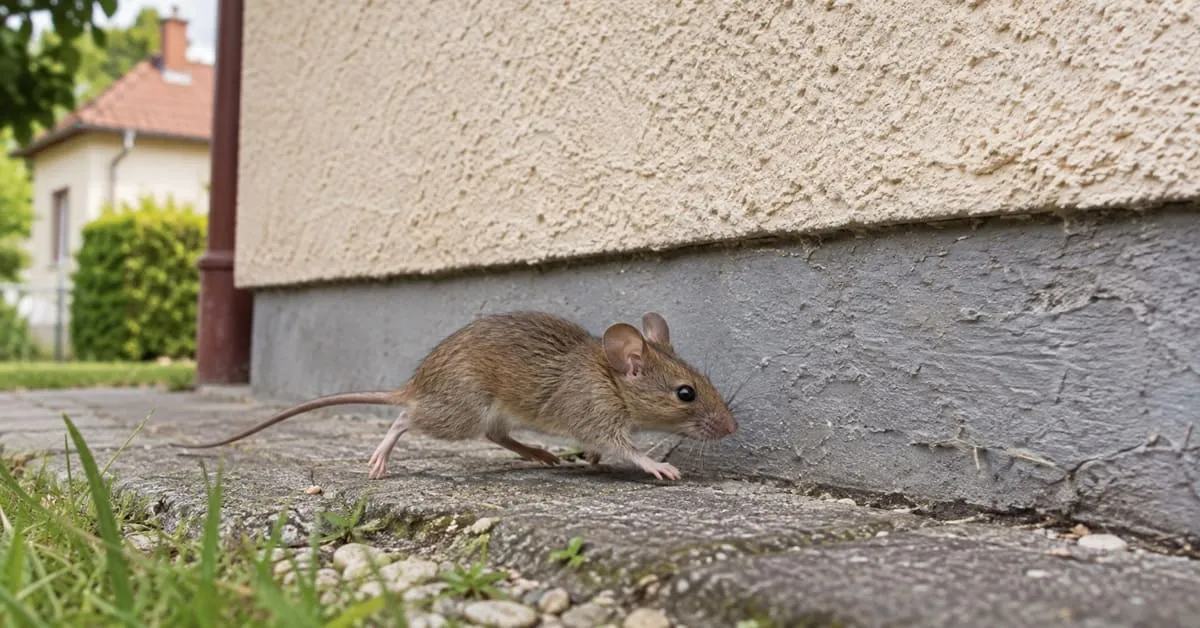
The outdoor rodent deterrence can be effective if, in addition to choosing the right device, you also pay attention to placement and keeping the surrounding area tidy. A mouse rustling under the terrace, a rat appearing next to the outbuilding, or a marten prowling around the driveway each create different situations, but the basics of defense are similar: you need to find the animals’ route, ensure the device has the right operating conditions, and reduce the area’s attractiveness.
Not every outdoor location requires the same rodent repellent. A covered terrace with a power outlet may call for a different solution than an open yard with neither rain protection nor mains electricity. In this guide, we’ll look at how to plan outdoor rodent deterrence, what simple protective cover you can make, and when it is worth choosing a solar-powered device.
Outdoor rodent deterrence begins with identifying the routes
It might seem obvious to place the repellent where there is a free power outlet, but that is not necessarily where it is needed most. First, find where the animals approach the area you want to protect. Check the base of the walls, the doors of outbuildings, the hidden corners behind storage areas, and the places where you have found fresh droppings, gnaw marks, or scattered material.
Observation also helps you refine your goal. Do you want to protect the terrace, reduce access to the garage, or is the problem appearing around a feed storage area? When planning rodent deterrence, it is worth starting from the protection of a specific route or entry point, rather than from the entire area of the yard.
Where should the ultrasonic rodent repellent be placed?
We cannot stress the most important point enough: the device’s speaker should face the route being used, and it should not be blocked by a flowerpot, a stack of firewood, garden furniture, or dense vegetation. This is because ultrasound does not pass through solid walls, and objects in its path can create shielded areas. For this reason, a repellent hidden behind a shed cannot be expected to cover the other side of the building as well.
Outdoors, the layout of the site is especially important. An open carport, a crowded terrace, and a yard made up of several outbuildings each require different placement. If there are multiple separated routes, you may also need several deterrent points.
Secure the device firmly, and adjust it so that the speaker points toward the area you want to protect. Do not place it directly on ground where water can collect or mud can splash up. However, do not choose the height on its own: what matters is that the sound path remains clear toward the animals’ route of movement.
Rain protection: an overhanging roof is one of the best solutions
Vadalarm rodent repellents can also be used outdoors in a properly protected location. You must prevent large amounts of water from flowing directly onto the device, or water from getting into its speaker. Outdoor placement is therefore not, on its own, a reason to rule it out, but the installation point must be chosen carefully.
If you have a covered terrace, an eave, or a sufficiently overhanging roof, first look for a place under one of those. Also check where rain could blow in from, and where water collecting on the roof might drip down. Even a spot protected from above can still get soaked in sideways rain.
Don’t forget about irrigation either. The repellent should not be placed in the spray of an irrigation head, and it should also not be placed in a spot where the pavement is regularly washed with a hose. When creating proper rain protection, you need to account for every possible source of water.
Simple DIY protective cover
If there is no suitable covered spot, a small protective cover can also help. You do not necessarily need to buy a separate casing for this: a piece of sheet metal or a roof made from a plastic container cut in half can also be a practical solution. When designing it, make sure it diverts water away from the device and that the wind cannot move it.
The protective cover should be wide enough so that water does not drip directly onto the repellent from it. Smooth down any sharp edges, and make sure the mounting does not damage the device or the power cable. After the first rain, it is worth checking whether the installation point really stayed dry.
Leave the space in front of the speaker open! If you put the repellent in a sealed box or wrap it completely, you may block the sound from spreading. The goal is to create protection that shields the device from water while the speaker can still face the animals’ route freely.
Power supply outdoors: mains, battery, or solar?
If mains power is available near the appropriate installation point, you can choose from the Vadalarm rodent repellents. In this case, you also need to protect the adapter and electrical connections from moisture. A small roof placed over the device does not, by itself, make an indoor extension cord or power supply suitable for outdoor use.
If there is no power outlet nearby, a battery-powered solution may also be an option, as long as you are willing to recharge it from time to time. It is worth thinking this through before buying: it is easier to manage at a terrace that is easy to access than at a site that is visited only rarely.
For rodent deterrence, it is also essential that the energy needed for the intended operation is available. Do not choose a socket that you regularly switch off, and when using a battery-powered device, do not think about charging it only after the device has already stopped working for a long time.
When is it worth choosing the Vadalarm Smart Pro Flash?
If you absolutely cannot provide rain protection, it is worth going for the Vadalarm Smart Pro Flash. We recommend the same if there is no mains power at the installation site and you do not want to deal with regularly charging a battery either. As a solar-powered device designed for outdoor use, it offers a solution for these situations. Although you will find this product among our animal repellents, you can easily switch it to rodent deterrence by adjusting its settings.
When placing a solar-powered device, look for a spot where the panel receives enough light. Dense foliage, persistent shadows from buildings, or objects blocking the panel can all be unfavorable for power supply. The placement therefore needs to be adapted both to the route you want to protect and to the needs of the solar panel.
If, however, rain protection and power supply can be provided, or charging is manageable, you can also freely choose from our rodent repellents. A covered carport or an installation point under an overhanging roof can be a good option for this.
Don’t leave a spread table in the yard!
In addition to outdoor rodent deterrence, it is worth eliminating the conditions that regularly attract the animals back. Spilled feed, pet food left out overnight, open trash bins, and untidy storage areas can all contribute to the problem.
Store food and feed in a tightly sealed, chew-resistant container, and regularly clean up any scattered leftovers. Also check piles of clutter and the areas around items that are moved only rarely: these can become undisturbed hiding places.
The repellent does not replace tidying up the environment or dealing with the building’s entry points. Together, these provide a well-thought-out defense. If you see signs of a larger population, or the problem persists over time, involving a professional may also be warranted.
How do you know the device is in the right place?
Before placing it, note down or take photos of the existing signs, then regularly check the same spots. Fresh droppings, new gnaw marks, and recurring movement tell you more than an old injury that was already there before installation.
If activity is still regular, check the speaker’s direction, any objects in the way, and any other possible approach route. Also check the power supply and whether the device or the protective cover has shifted.
Always evaluate the effectiveness of rodent deterrence based on on-site experience.
Frequently asked questions about outdoor rodent deterrence
Can a Vadalarm rodent repellent be used outdoors?
Yes, it can be used in a properly protected location. You must prevent large amounts of water from flowing directly onto the device, or water from getting into its speaker. A spot under an overhanging roof can be ideal, but a properly designed small protective cover may also work.
Which rodent repellent should I choose if there is no electricity in the yard?
If you are willing to recharge it from time to time, a battery-powered rodent repellent can also be a solution. If there is no mains power and you do not want to charge the device either, we recommend the solar-powered Vadalarm Smart Pro Flash. During installation, it is important to make sure the solar panel receives enough light.
What should I choose if I cannot provide rain protection?
In this case, it is worth choosing the Vadalarm Smart Pro Flash designed for outdoor use. Do not leave the rodent repellent that requires protected placement in a spot directly exposed to precipitation.
Can I make a protective cover for the rodent repellent myself?
Yes, for example, suitable protection can be made from sheet metal or from a plastic container cut in half. Secure it firmly, divert water away from it, and do not cover the space in front of the speaker. Do not enclose the device in a casing that blocks the spread of ultrasound.
Can a single rodent repellent protect the entire yard?
This depends on the layout of the area, the device, and the animals’ routes. Walls, outbuildings, woodpiles, and other obstacles can create several separate areas, so it is not enough to consider only the square footage. Multiple deterrent points may be needed for several distinct routes.
Is it enough just to place the repellent?
In addition to the device, food sources, hiding places, and possible entry points also need to be addressed. Rodent deterrence works well when combined with thoughtful prevention and regular checks. In the case of a persistent or widespread problem, additional methods of control and professional help may also be needed.
Was this article helpful?